


NAHDA™
Needs • Asset • Human • Delivery • Accountability
NAHDA™
Rising Impact Through Structured Transformation
What is NAHDA™?
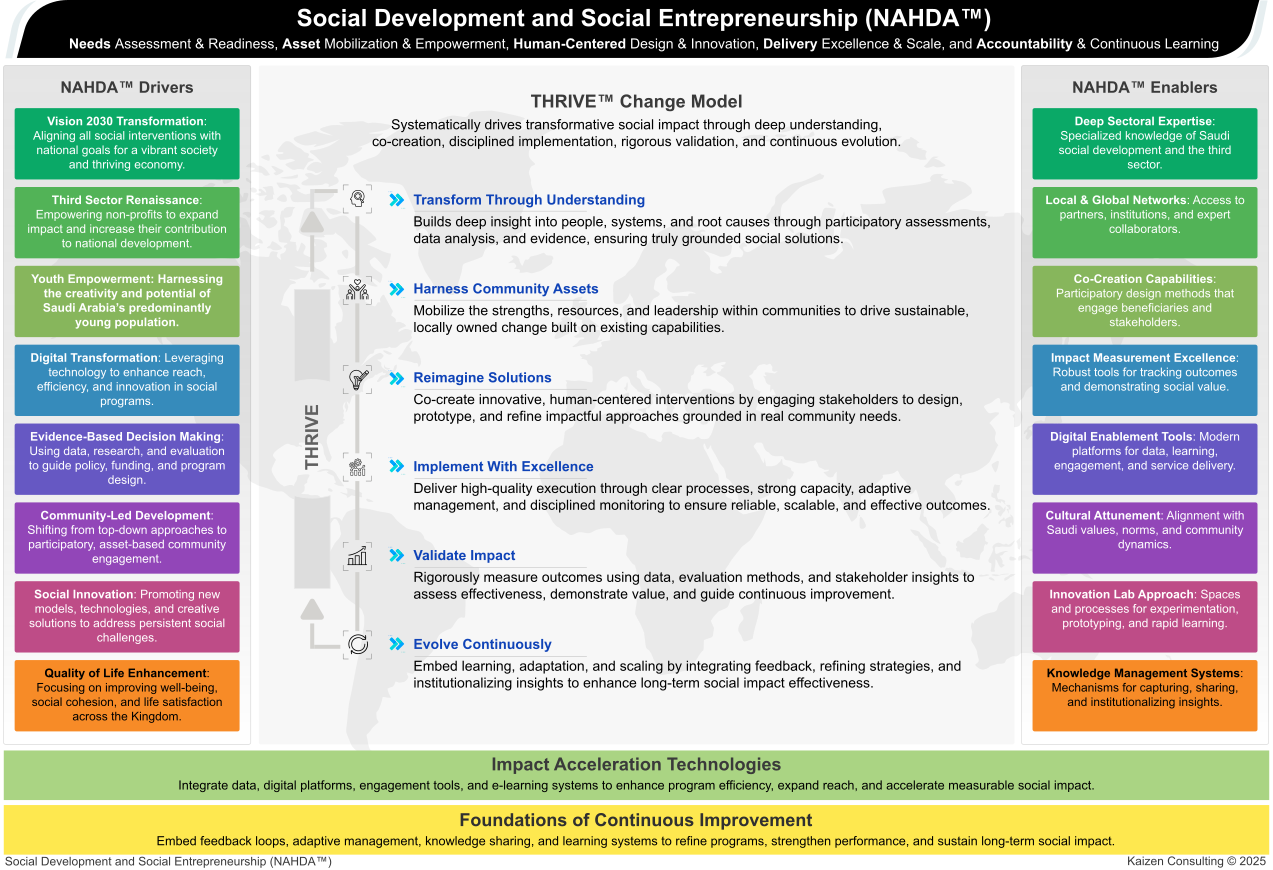
NAHDA™ is Kaizen Consulting’s proprietary methodology for driving social transformation through a culturally attuned, evidence-based, and community-centered approach. It unifies strategy, design, delivery, and learning into one integrated framework.
How It Works
Built on five core pillars and operationalized through the THRIVE™ six-phase change model, NAHDA™ guides organizations from deep understanding to co-creation, excellence in execution, rigorous impact validation, and continuous evolution.
Why It Wins
NAHDA™ succeeds because it aligns with Vision 2030 priorities, mobilizes community assets, embeds measurable impact, leverages digital tools, and ensures adaptive learning to create solutions that are scalable, sustainable, and contextually powerful.
01.
02.
NAHDA™ Drivers
03.
These are the means that make our methodology work. They include expert teams, strong partnerships, digital tools, cultural understanding, and proven design methods. Together, they help us deliver solutions that are practical, inclusive, and built for real impact.
How NAHDA™ Works End-to-End?
Phase 0
Mobilize & Charter
Phase 0
Mobilize & Charter
Goal: Establish project governance, define scope, and align stakeholders on objectives, roles, and success metrics.
Scope: This phase sets the foundation for NAHDA™ implementation by forming the core team, defining governance structures, clarifying project scope and deliverables, and aligning all stakeholders on vision, outcomes, and timelines.
Exit-Gate: Project charter approved, governance structure established, and mobilization plan endorsed.
Phase 1
Understand & Diagnose
Phase 1
Understand & Diagnose
Goal: Build a deep understanding of the challenge, target populations, and ecosystem dynamics.
Scope: Conduct needs assessments, stakeholder mapping, data reviews, baseline measurements, and root-cause analysis to uncover real problems, opportunities, and contextual insights.
Exit-Gate: Diagnostic report validated, key insights agreed, and priority problem statements approved.
Phase 2
Co-Create & Design
Phase 2
Co-Create & Design
Goal: Generate and refine human-centered, evidence-based solutions with stakeholders.
Scope: Facilitate co-creation workshops, develop theories of change, prototype solutions, validate concepts with users, and design program or model blueprints aligned with needs and assets.
Exit-Gate: Final solution concept, theory of change, and design blueprint approved.
Phase 3
Plan & Prepare
Phase 3
Plan & Prepare
Goal: Translate the designed solution into an actionable, resourced, and ready-to-launch plan.
Scope: Develop detailed implementation plans, budgets, capacity requirements, risk frameworks, governance mechanisms, and monitoring indicators needed for successful rollout.
Exit-Gate: Implementation plan endorsed, resources allocated, and readiness confirmed.
Phase 4
Implement & Enable
Phase 4
Implement & Enable
Goal: Execute the solution with excellence and build capabilities for sustained delivery.
Scope: Deliver programs, train teams, establish operational processes, manage change, and use real-time monitoring to track quality and progress against targets.
Exit-Gate: Program delivered to standard, performance indicators met, and operational capability embedded.
Phase 5
Measure & Validate
Phase 5
Measure & Validate
Goal: Assess results, measure outcomes, and understand the social value created.
Scope: Conduct mixed-method evaluations, analyze data, assess Social Return on Investment (SROI), collect user feedback, and validate impact against the theory of change.
Exit-Gate: Impact report approved, validated findings documented, and insights captured.
Phase 6
Learn & Evolve
Phase 6
Learn & Evolve
Goal: Institutionalize learning and enhance, scale, or adapt the solution over time.
Scope: Conduct after-action reviews, update models, refine processes, plan for scale, embed knowledge, and integrate lessons into future cycles.
Exit-Gate: Improvement roadmap endorsed, scaling plan approved, and learnings integrated into organizational systems.
Have Any Queries?
Get a Free Consultation
One of our consultants will contact you soon.
