


OASISS™
Optimized Assessment • Systemic Integration • Sustainable Solutions
OASISS™
The Engine of Environmental Transformation
What is OAASISS™?
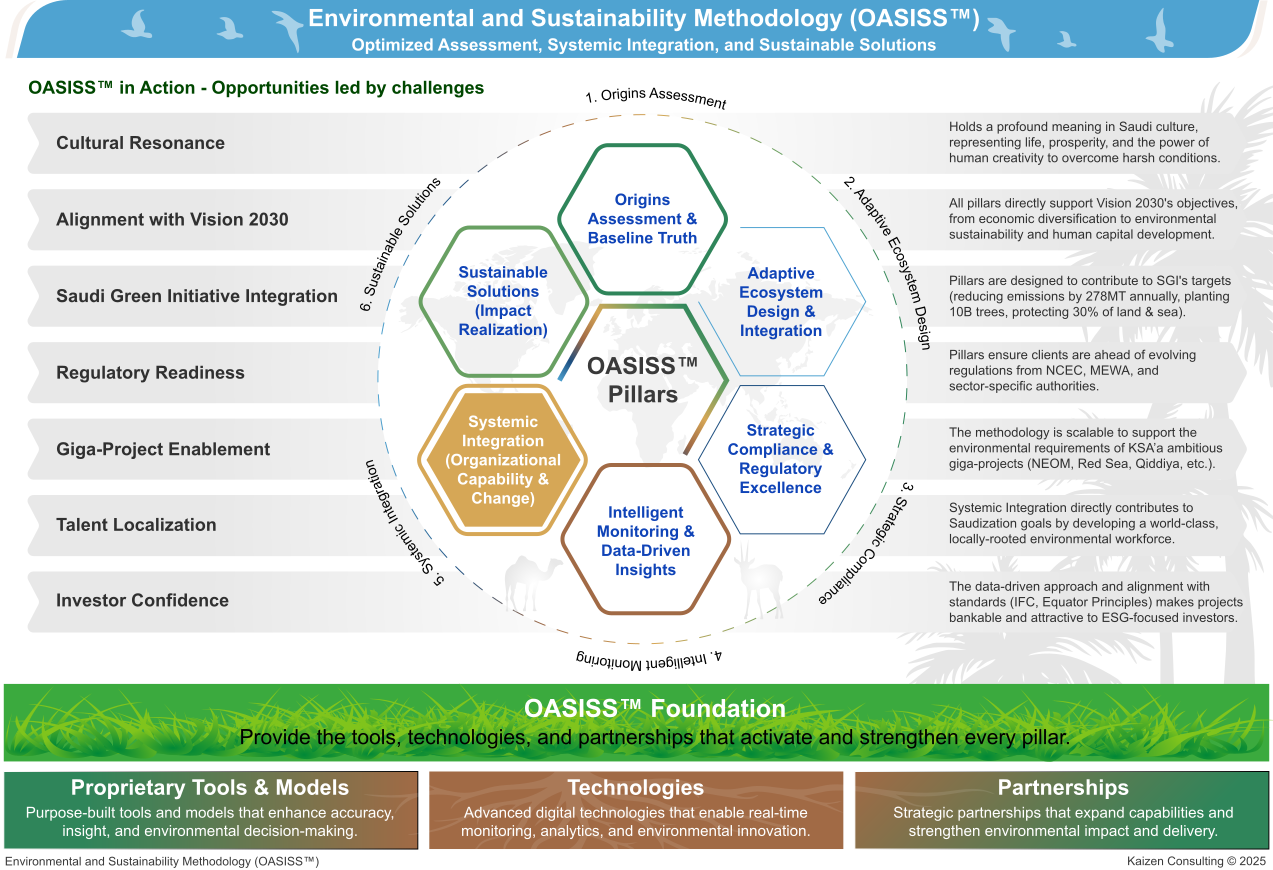
A holistic, Saudi-contextual methodology built on six powerful pillars that integrate science, strategy, technology, compliance, and human capability to create thriving “oases” of sustainability across organizations, cities, and ecosystems.
How It Works
Because OASISS™ delivers more than compliance, it creates competitive advantage. It enables faster approvals, stronger environmental performance, smarter decision-making, and resilient, nature-positive outcomes. It empowers clients to lead the future of sustainable development in the Kingdom.
Why It Wins
OASISS™ succeeds because it aligns with Vision 2030 priorities, mobilizes community assets, embeds measurable impact, leverages digital tools, and ensures adaptive learning to create solutions that are scalable, sustainable, and contextually powerful.
01.
These pillars form a powerful, interconnected framework that guides organizations from baseline understanding to regenerative impact. Each pillar works in harmony, integrating science, ecosystem design, regulatory excellence, intelligent monitoring, organizational capability, and sustainable value realization.
02.
A continuous, adaptive pathway that drives lasting environmental excellence. It moves organizations from understanding their current reality to designing ecosystem-aligned solutions, achieving regulatory confidence, enabling real-time intelligence, building internal capability, and realizing measurable, regenerative impact.
03.
How OASISS™ Works End-to-End?
Phase 0
Mobilize & Charter
Phase 0
Mobilize & Charter
Goal: Establish project governance, define scope, and align stakeholders on objectives, roles, and success metrics.
Scope: This phase sets the foundation for OASISS™ implementation by forming the core team, defining governance structures, clarifying project scope and deliverables, and aligning all stakeholders on vision, outcomes, and timelines.
Exit-Gate: Project charter approved, governance structure established, and mobilization plan endorsed.
Phase 1
Origins Assessment & Baseline Truth
Phase 1
Origins Assessment & Baseline Truth
Goal: Build a rigorous understanding of the environmental, social, and regulatory baseline to anchor all future decisions.
Scope: Conduct multi-dimensional baseline studies, regulatory reviews, geospatial assessments, risk screenings, and stakeholder mapping to establish a complete picture of current conditions and vulnerabilities.
Exit-Gate: Validated baseline dataset, risk register, and baseline report approved.
Phase 2
Adaptive Ecosystem Design
Phase 2
Adaptive Ecosystem Design
Goal: Develop integrated, nature-aligned design solutions that minimize impacts, enhance resilience, and maximize value creation.
Scope: Apply the mitigation hierarchy, evaluate nature-based solutions, assess circularity opportunities, model adaptation scenarios, and define ecosystem-centric design requirements aligned with regulatory and sustainability goals.
Exit-Gate: Ecosystem design blueprint and prioritized mitigation/restoration actions endorsed.
Phase 3
Strategic Compliance & Regulatory Alignment
Phase 3
Strategic Compliance & Regulatory Alignment
Goal: Secure full regulatory clarity and develop a structured pathway to achieve timely approvals.
Scope: Map applicable regulations, prepare permitting strategies, develop compliance plans, create authority-ready documentation, and engage proactively with regulators to de-risk review cycles.
Exit-Gate: Compliance roadmap validated; permitting dossiers and submission strategy approved.
Phase 4
Intelligent Monitoring & Data Enablement
Phase 4
Intelligent Monitoring & Data Enablement
Goal: Build the data, monitoring, and digital infrastructure required for transparent, real-time environmental performance management.
Scope: Design and implement monitoring networks, data governance, dashboards, AI models, and reporting automation to transform data into predictive intelligence.
Exit-Gate: Monitoring framework operational, data quality validated, and dashboards accepted.
Phase 5
Systemic Integration & Capability Building
Phase 5
Systemic Integration & Capability Building
Goal: Embed environmental excellence into organizational culture, capabilities, and operating models.
Scope: Deliver training programs, competency frameworks, change management initiatives, stakeholder engagement plans, and operational procedures enabling sustained adoption and continuous improvement.
Exit-Gate: Capability roadmap approved and organizational readiness confirmed.
Phase 6
Sustainable Solutions & Impact Realization
Phase 6
Sustainable Solutions & Impact Realization
Goal: Measure, communicate, and optimize environmental, social, and economic outcomes for long-term sustainability.
Scope: Conduct impact assessments, evaluate ROI, verify restoration outcomes, publish sustainability results, and refine adaptive management cycles for ongoing performance enhancement.
Exit-Gate: Impact report validated, KPIs achieved, and continuous improvement plan endorsed.
Have Any Queries?
Get a Free Consultation
One of our consultants will contact you soon.
