


ReCAP™
Research-led • Learning-powered • Impact-driven
ReCAP™
Building Solutions-Knowledge-Capability
ReCAP™ is Kaizen Consulting’s integrated methodology for research, academic consulting, and capacity building. It unifies proven analytical tools, structured frameworks, and smart enablers to diagnose needs, design solutions, and deliver measurable development.
How it works?
ReCAP™ follows the D³ Change Model to identify real needs, build evidence-based programs, integrate digital tools, and ensure solutions are implemented effectively. It embeds continuous improvement, governance, and data analytics at every stage.
Why it wins?
ReCAP™ consistently produces results because it combines precision diagnostics, practical solution design, and performance measurement. It enables sustainable improvement, accelerates transformation, and empowers institutions with tools and capabilities that deliver long-term impact.
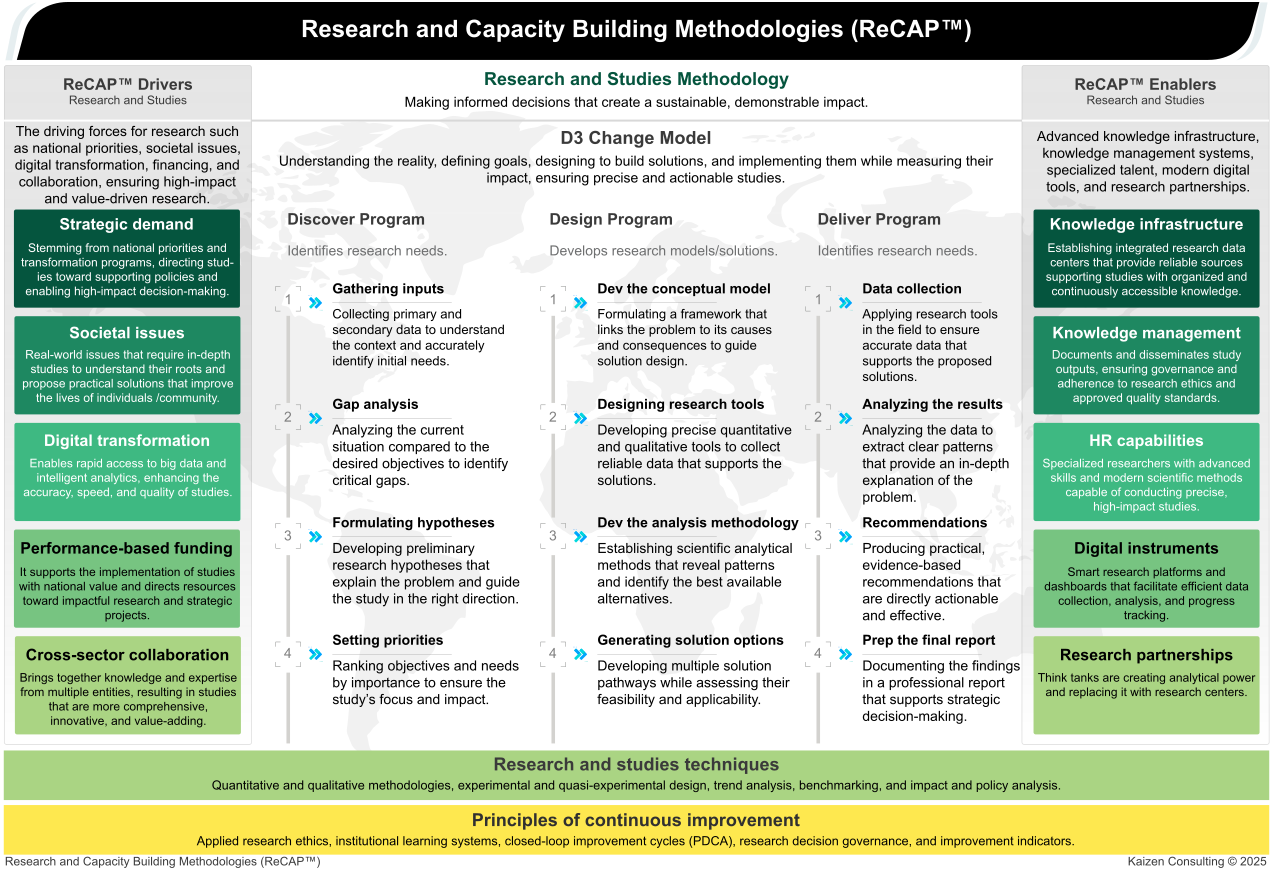
ReCAP™ - Research and Studies Methodology
Kaizen Consulting applies the ReCAP™ to help clients make evidence-based decisions by identifying real needs, designing research-driven solutions, applying advanced analytical tools, and delivering actionable recommendations.
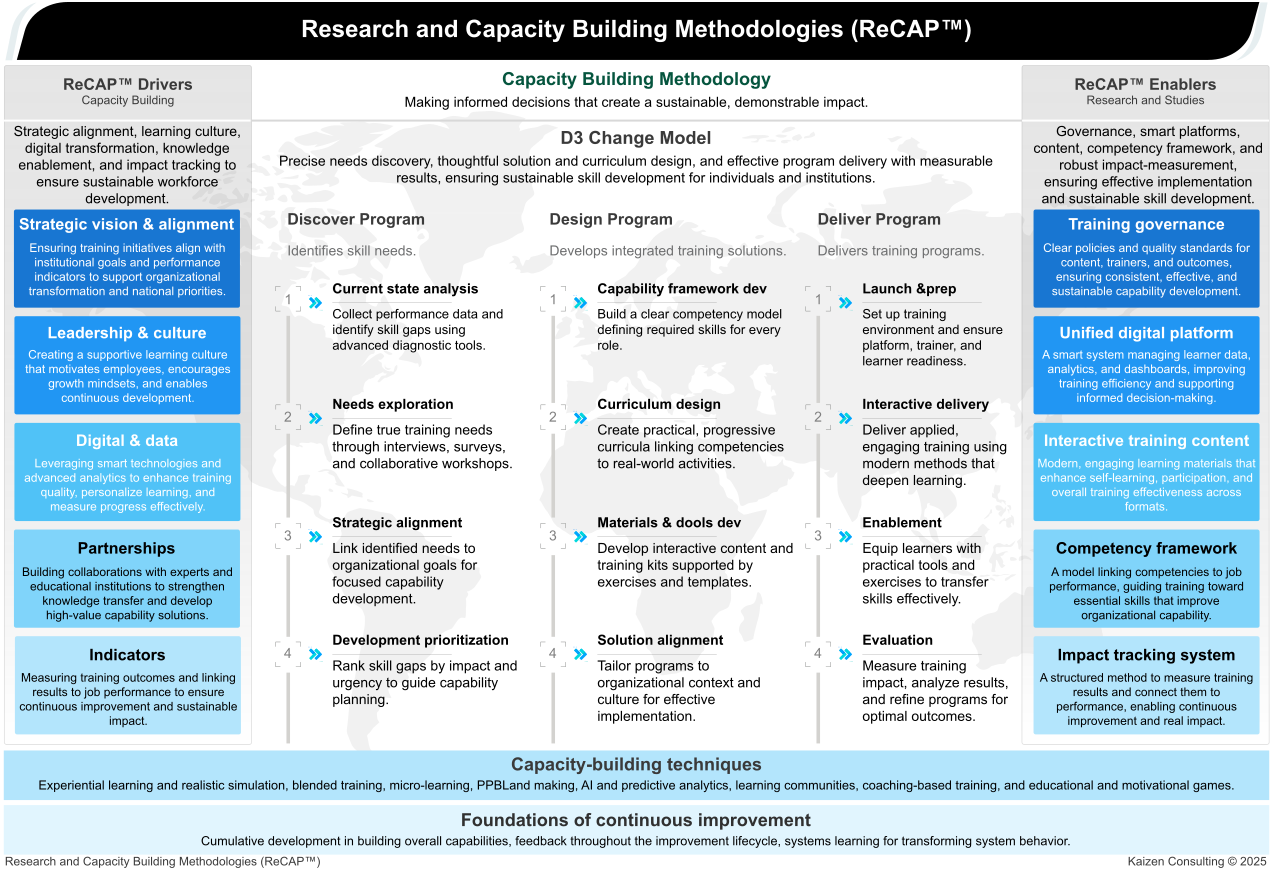
ReCAP™ - Capacity Building Methodology
Kaizen Consulting leverages the ReCAP™ to identify real skill gaps, design targeted learning solutions, deliver engaging training, and measure impact to ensure sustainable workforce capability, organizational alignment, and measurable performance improvement.
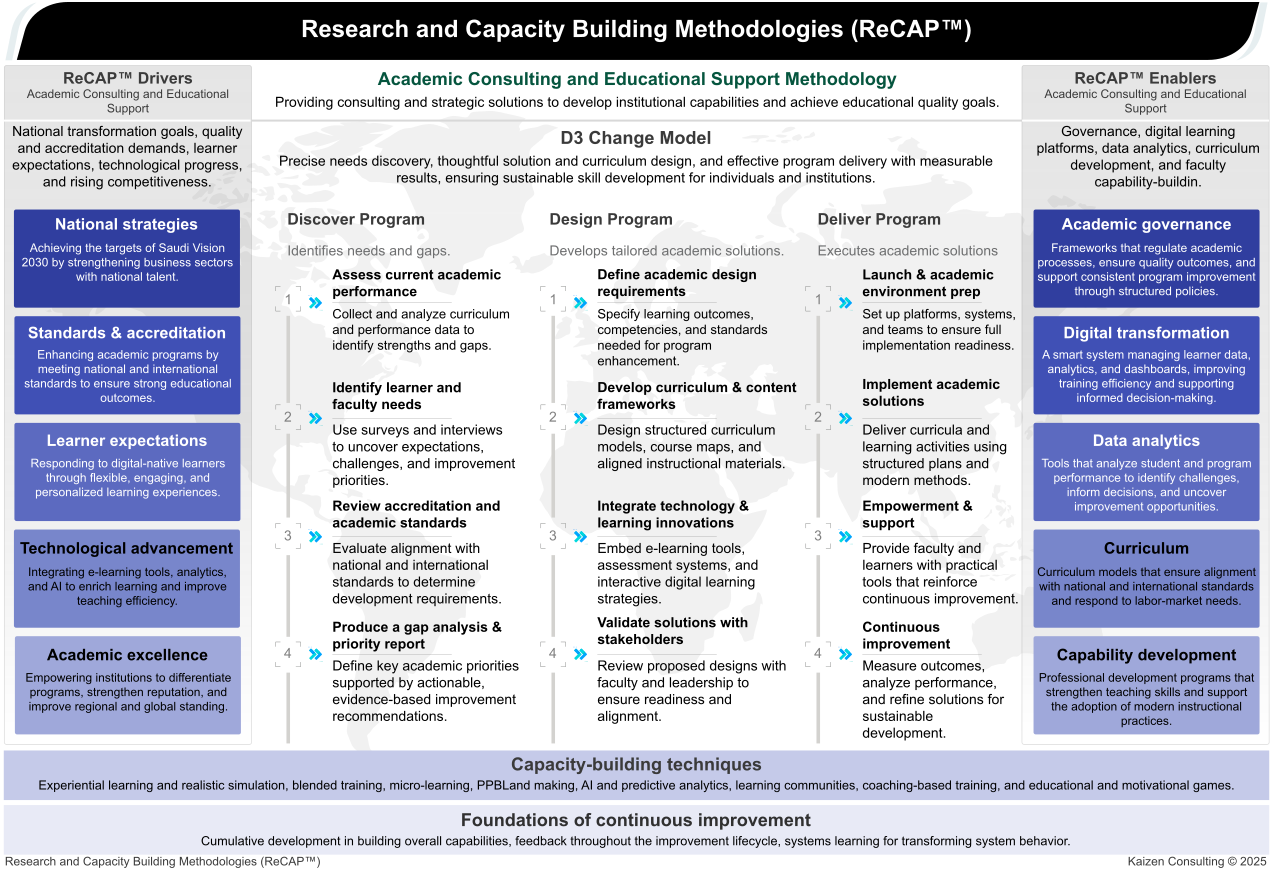
ReCAP™ - Academic Consulting and Educational Support Methodology
Kaizen Consulting uses the ReCAP™ to assess academic performance, design modern curricula, integrate digital learning innovations, and implement evidence-based improvements, to help institutions achieve quality outcomes, stronger programs, and sustainable educational excellence.
Sub-methodologies in ReCAP™

Research and Studies Methodology
D³ Change Model: Ensures effective research through structured discovery, evidence-based design, and actionable solution delivery.
Drivers: Guide research by addressing national priorities, societal issues, digital transformation needs, and cross-sector collaboration.
Enablers: Provide the infrastructure, talent, digital tools, and governance needed.
Research and Studies Methodology
D³ Change Model: Ensures effective research through structured discovery, evidence-based design, and actionable solution delivery.
Drivers: Guide research by addressing national priorities, societal issues, digital transformation needs, and cross-sector collaboration.
Enablers: Provide the infrastructure, talent, digital tools, and governance needed.

Capacity Building Methodology
D³ Change Model: Strengthen capacity building through structured discovery, thoughtful solution design, and effective delivery that ensures measurable, sustainable skill development.
Drivers: Steer capacity building by aligning vision, fostering learning culture, leveraging digital tools, and integrating partnerships.
Enablers: Provide governance, digital platforms, quality content, competency frameworks, and impact-tracking systems that ensure effective capability development.
Capacity Building Methodology
D³ Change Model: Strengthen capacity building through structured discovery, thoughtful solution design, and effective delivery that ensures measurable, sustainable skill development.
Drivers: Steer capacity building by aligning vision, fostering learning culture, leveraging digital tools, and integrating partnerships.
Enablers: Provide governance, digital platforms, quality content, competency frameworks, and impact-tracking systems that ensure effective capability development.

Academic Consulting and Educational Support Methodology
D³ Change Model: Drives academic improvement through structured discovery, evidence-based design, and effective delivery of sustainable educational solutions.
Drivers: Guide academic consulting by addressing national strategies, accreditation standards, learner expectations, technological advancement, and academic excellence.
Enablers: Provide academic governance, digital platforms, data analytics, modern curricula, and faculty development systems that ensure consistent quality.
Academic Consulting and Educational Support Methodology
D³ Change Model: Drives academic improvement through structured discovery, evidence-based design, and effective delivery of sustainable educational solutions.
Drivers: Guide academic consulting by addressing national strategies, accreditation standards, learner expectations, technological advancement, and academic excellence.
Enablers: Provide academic governance, digital platforms, data analytics, modern curricula, and faculty development systems that ensure consistent quality.
How ReCAP™ Works End-to-End?
ReCAP™ Success Model in Steps
Implementing ReCAP™ Methodologies requires a structured, phased approach that ensures clarity, alignment, and measurable impact. The following phases create a unified implementation roadmap for Research and Studies, Academic Consulting, and Capacity Building.
Each phase builds upon the previous one, starting with mobilization, moving through discovery and design, and culminating in delivery and continuous improvement.
This framework ensures that all ReCAP™ components, drivers, the D³ Change Model, and enablers, are consistently applied to create sustainable, high-quality outcomes.
Phase 0 — Mobilize & Charter
Goal: Establish project governance, define scope, and align stakeholders on objectives, roles, and success metrics.
Scope: This phase sets the foundation for ReCAP™ implementation by forming the core team, defining governance structures, clarifying project scope and deliverables, and aligning all stakeholders on vision, outcomes, and timelines. A formal charter is developed to secure leadership commitment and resource allocation.
Exit Gate: Project charter approved, governance structure established, and mobilization plan endorsed.
Phase 1 — Discover Needs & Priorities
Goal: Identify gaps, needs, and performance priorities across research, academic, and capability domains.
Scope:
-
- Conduct current-state assessments (research inputs, academic performance, workforce capability).
- Perform gap analyses using ReCAP™ diagnostic tools.
- Engage stakeholders through interviews, workshops, and surveys.
- Align needs with institutional goals, national strategies, and ReCAP™ drivers.
- Prioritize needs based on impact, urgency, and feasibility.
Exit Gate: Needs Assessment Report validated, priority matrix approved, and discovery findings accepted.
Phase 2 — Design Models, Frameworks & Solutions
Scope:
-
- Develop conceptual models and analytical frameworks (Research Methodology).
- Design academic curriculum models, course maps, and learning outcomes (Academic Consulting).
- Build competency frameworks, training curricula, and instructional content (Capacity Building).
- Integrate enablers such as digital tools, governance models, data analytics, AI capabilities, and accreditation requirements.
- Validate designs with stakeholders to ensure alignment, readiness, and feasibility.
Exit Gate: Solution Design Blueprint approved, including tools, frameworks, and implementation models.
Phase 3 — Develop Tools, Content & Platforms
Scope:
-
- Build research instruments, quantitative and qualitative tools, and analytical models.
- Develop academic content, courseware, assessment tools, and instructional materials.
- Produce training kits, exercises, simulation tools, and blended learning resources.
- Configure digital platforms, dashboards, and data-collection systems.
- Prepare support documentation, guides, and policy frameworks.
Exit Gate: Tools, content, and platforms tested, quality-assured, and approved for deployment.
Phase 4 — Deliver Implementation & Enablement
Goal: Execute research studies, academic enhancements, or capability-building programs while enabling institutional teams for sustained use.
Scope:
-
- Conduct field data collection, studies, benchmarking, and analysis.
- Deliver academic programs, curriculum rollouts, and faculty development.
- Facilitate training programs with interactive, applied learning methodologies.
- Implement change-management plans, prepare teams, and provide enablement toolkits.
- Ensure readiness of platforms, trainers, faculty, researchers, and stakeholders.
Exit Gate: Implementation activities completed, stakeholders enabled, and delivery validated against success criteria.
Phase 5 — Measure Impact & Optimize
Scope:
-
- Apply ReCAP™ impact-tracking tools, metrics, and governance frameworks.
- Measure outcomes for research studies, academic improvements, and training programs.
- Conduct performance analysis, feedback loops, and adherence audits.
- Recommend enhancements based on evidence, stakeholder feedback, and analytics.
- Prepare final reports showcasing results, best practices, and next-step recommendations.
Exit Gate: Impact Report approved, optimization actions endorsed, and lessons learned documented.
Phase 6 — Sustain & Institutionalize
Scope:
-
- Institutionalize policies, standards, and operating models.
- Transfer knowledge, tools, and frameworks to internal teams.
- Establish continuous-improvement cycles, governance committees, and monitoring dashboards.
- Build long-term partnerships for research, academic excellence, and capacity development.
Exit Gate: Full handover completed, sustainability mechanisms activated, and institutional ownership confirmed.
Have Any Queries?
Get a Free Consultation
One of our consultants will contact you soon.
